Saturday, January 23, 2010

For the Love of Math

"I'm acute, you're acute, maybe together we can make it right."

I love having a fellow math major as a roommate. We understand each others' math jokes, like the above pick up line we made up on the spot. We speak math to each other, help each other understand math concepts (like when I was trying to explain what rings are in abstract algebra...and another of my roommates kept insisting it was a piece of jewelry). This same math-loving roommate understands my affinity for math...something my other roommates (including previous ones) don't seem to understand.

But aside from that...third week of the latest semester is completed. Second semester of Abstract Algebra (what in the WORLD am I thinking?!), numerical analysis (I'm going to learn how my calculator works...and become smarter than it), and probability & statistics (calc and stats combined...I think my brain imploded just typing that). And yet I still love math. ^__^

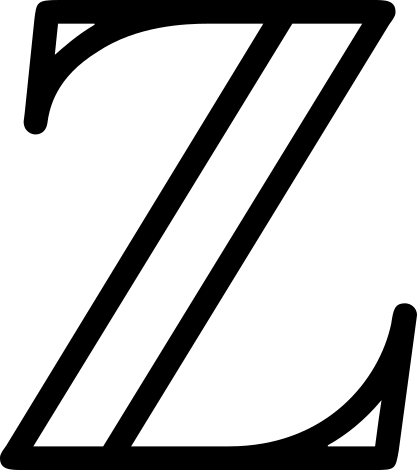
Oh, and the next time someone Z-snaps at you, Z-snap back saying, "I do the integers. What now?" (You know...Z, the symbol for the integers...the symbol at the right...right over there. You DO see it, right? Sheesh...)

Saturday, October 31, 2009

Have a Mathy...Happy Halloween!


HAPPY HALLOWEEN! As a treat, I share this picture I made based somewhat on something someone drew in my Multivariable Calculus class a year ago. And for those who don't know, eigenvalues are values associated with a square matrix that can be used to analyze its behavior in multiplying any vector. It's basically a scalar that can multiply with a corresponding eigenvector, so that when you multiply the square matrix and the eigenvector together, it is the same thing as multiplying the eigenvalue with the eigenvector (Ax = λx, where A is a square matrix, x is a nonzero vector, and λ is the eigenvalue).

I won't even start on the gradient (fx,fy) and what it does. It would take too long (and I don't really feel like explaining partial derivatives when I should be studying for my Differential Equations test).
"Trick or treat, trick or treat, give us something good to eat. If you don't, we don't care, we'll put red ants in your hair. Trick or treat, trick or treat, we love candy oh so sweet. Each and every Halloween we all say trick or treat!"

Monday, October 19, 2009

Math Geek Alert

This is just a random post cuz I need to waste time. (Conscience: Waste time? You don't have time for that! Get back to studying for your abstract algebra midterm! You want to fail?!) No, I don't want to fail. Thank you, conscience. But I can't study without my abstract algebra notes/textbook, now can I? (Conscience: *silence*) That's what I thought. So, ignoring the voice(s) in my head, here we go!


Q: What do you get if you divide the cirucmference of a jack-o-lantern by its diameter?
A: Pumpkin Pi!

A newlywed husband is discouraged by his wife's obsession with mathematics. Afraid of being second fiddle to her profession, he finally confronts her: "Do you love math more than me?"
"Of course not, dear - I love you much more!"
Happy, although sceptical, he challenges her: "Well, then prove it!"
Pondering a bit, she responds: "Ok... Let epsilon be greater than zero..."

*This one describes me...well, the last part anyway*
"So how's your boyfriend doing, the math student?"
"Don't mention that crazy pervert to me anymore! We broke up."
"How can you say such a nasty thing about him? He seemed to be such a nice boy."
"Imagine! He was restless during the days and couldn't sleep at night - always trying to solve his math problems. When he had finally done it, he wasn't happy: he would call himself a complete idiot and throw all his notes into the garbage. One day, I couldn't take it anymore, and I told him to drop math. You know what he told me?"
"No."
"He said, he enjoyed it!!!"

Q: What does the Ph.D. in math with a job say to the Ph.D. in math without a job?
A: `Paper or plastic?'

"What is Pi?"
A mathematician: "Pi is the ratio of the circumference of a circle to its diameter."
A computer programmer: "Pi is 3.141592653589 in double precision."
A physicist: "Pi is 3.14159 plus or minus 0.000005."
An engineer: "Pi is about 22/7."
A nutritionist: "Pie is a healthy and delicious dessert!"

At a conference, a mathematician proves a theorem.
Someone in the audience interrupts him: "That proof must be wrong - I have a counterexample to your theorem."
The speaker replies: "I don't care - I have another proof for it."
*I put this one here because in my abstract algebra class, my professor made the comment that one of the students would prove the next fourty theorems just by saying, "Because I say so," and we wouldn't question it*


Well...that's over. And I just killed an hour and a half. (Sorry time/clock/whatever controls hours.) That's what searching for math jokes does to you. And I never knew there were so many. Now I'm leaving this crazy joint I call my blog. (Conscience: So you gonna do your abstract algebra now?) Is the limit as x approaches zero of sin(x)/x equal to -1? (Conscience: Uhh...no?) There's your answer.

P.S. I actually had some cooler stuff, but blogspot apparently doesn't like me having too many spaces when I "draw" pictures via the keyboard. So I'll try to figure a way to share the fun things with you at a later date.

Tuesday, September 29, 2009

Ramblings

Who knew abstract algebra would be applicable? Okay, it really is applicable. I just don't really understand how in the real world...yet. And while I struggle with writing proofs (can't we just accept the fact that it's true?), I know in the long run it will help me. Especially if I plan on taking the second semester of abstract algebra *cringe*. I need challenge in my life. And I've been better this semester concentrating on my schoolwork than any other semester. But at the same time, I have a bigger load to deal with. But that's what defines college...besides the social part.

I'm getting off topic. What this post is really about is some of the facts I learned in my classes, whether they're applicable to the real world, my life, or just something fun:
ODEs: I can't sleep in class? Really?
Real World Math: I hate notation...
Abstract Algebra: I learned how a debit/credit card works. The numbers on your credit card actually have more numbers than you really need. The last two numbers are actually a checksum. A checksum is a number that "checks" the previous numbers using modular addition. So if you type in your credit card number for an online purchase, the checksum is helpful because if you mistype a number, or switch two of them, the checksum will actually correct it. Yay for error checking!
Data Structures: You know it's bad when you are one of five girls in a 30-seat class. You know it's even worse when you realize you have more of a social life than most of your classmates...and you hardly have one yourself. *bangs head on wall*
Intro to Applied Math: Graph Theory is confusing...and I hate the Brute Force Algorithm. Give me Nearest Neighbor ANYDAY!

So yeah...that pretty much sums up the first three weeks of school (has it really been that long?) excluding the actual subject material. And so far I'm not suffering from the mathiness. Each class is different from the other (one theory, one semi-theory...but more exploration, one real world, and one applicable, where I actually solve math problems). It makes for a nice balance. Computer science on the other hand...at least I only fell asleep once in that class so far. >_<

P.S. Can you solve the Million Dollar Math question? Or the other Million Dollar Math question? If you can do the second...our Internet will be shut down until a new encryption algorithm is created (and apparently my fellow applied math majors and I will make a lot of money because we will understand group theory that is used to create an encryption algorithm). This idea will be the plot to the sequel of Matrix Man*...and his sidekick** who has yet to acquire a name.

* We don't really have a title for the first one...and we still haven't worked much on it. But we still have the napkin with our ideas written on it. Maybe we'll work on something over Thanksgiving break. *shrug*

** A computer science professor

Friday, September 11, 2009

Bliss

Wow. I'll say it again. Wow! Who knew one would feel so deprived after a five-month summer break that they would actually enjoy going back to school? Well, besides my computer science class, and quite possibly my abstract algebra class, I'm really looking forward to this semester. The true measure of a math geek? Give up your "fun" class* in order to take a fourth math class. ^__^Yes, I think I have officially crossed the borderline between geek and insanity. I think I do this partly as punishment for myself, but also because I secretly enjoy it. Yes, I enjoy taking grueling courses and slamming my head on my desk everytime I spend more than an hour on a particular subject of math or three hours on a computer program. Okay, so I secretly like being a math major because I like the responses I get when I tell people (You like math? Really?). Yes, yes I like math. Obviously. Otherwise I wouldn't have a blog about it. (That's a duh.) But from the first two days of classes, I can tell that I'm going to be learning some interesting topics (death from overload not included).

So while I don't know if anyone actually reads my blog (I do this for my own enjoyment), I'll probably be putting up some of the cool ideas I learn. If the fancy to post them to my blog comes to me. And provided I haven't already suffered brain damage from overdose of mathiness...is such a thing possible? Don't answer that. So, wish me luck and that I will survive the homework load. And that I'll still have a social life (or at least a semblance of one).

P.S. My roommate has a pi locker. ^_____^


*Btw, this
was a religion class where you read the Old Testament in Hebrew. Fun? YES!!! Tons of work in an already demanding schedule? *sigh* Yeah. So honestly, between the two classes, it's the same amount of work...but one actually helps me with my major. Hopefully this class will be offered again...taught by the same professor.

Friday, August 7, 2009

cout << "Hello again!\n";

I must be out of my mind. It is past midnight, the night before (or the morning of) the day I leave for vacation (yay!). But I can sleep in (because of no work and the fact that I leave late afternoon). This of course makes the assumption that I don’t set the alarm to wake me up early so that I can finish last minute packing…or someone texts me insanely early (7:25 AM) to ask what time he’s supposed to pick me up to take me to the airport. But enough about that. I need to do one last entry of my historical mathematician biographies. I feel that I’ve kept the book from the library for too long. I’m sure someone else [sic] wants to check it out. And I’m too cheap to buy it from the library (barring the fact that I don’t even know how much the library would charge me). So…maybe I’ll continue at a later date. Although it depends on if I’m still in need of material for entries (which very well may be the case during vacation time away from school).

Anyways, I really wanted to do this entry before I returned it to the library. One of my clusters for my minor is Computer Science. Now the thing is…I kinda stink at it. I still get good grades, but ask me to actually compose my own functional program in C++ (I’m only a beginner…two classes, the intro and object-oriented *shudder*), I’ll hem and haw…and might be able to do it, but will have to consult my Absolute C++ textbook for much reference. And that’s a big headache. And debugging is not the way I like to spend my afternoons (for a few weeks straight). I will admit that I’m very glad when I successfully [sic] complete a program. Computer science fascinates me, even if I don’t really have the patience or the mindset for it. And I’d much prefer computer science over physics or biology (don’t know why). So if I can’t have music as a cluster with my major, I’ll go with computer science and try to take as many difficult courses every semester as I can before I graduate with my bachelors because I'm a masochist (not). (I almost had three math classes, a computer science class, and a biology class/lab this next semester…but I felt that death would not be welcome so soon, and I took a biology class this summer. So now I just need to survive the three math classes and the computer science class. And the religion class where I get to learn Hebrew and read the Bible in its original language…and that’s my fun optional class.) So, this blog entry is about Donald E. Knuth, an American computer scientist and mathematician.

Donald E. Knuth

Donald Knuth was born January 10,1937 in Milwaukee, Wisconsin. Early on, Knuth realized that most of the schoolwork required of him from middle school to college consisted mostly of writing and mathematics. (Ain’t that the truth.)

“One of Knuth’s fond memories is the Ziegler’s Candies contest. The manufacturers of the Ziegler’s candy bar sponsored a contest where contestant had to see how many words they could find in the letters in “Ziegler’s Giant Bar.” In the 8th grade, Knuth knew he had a knack for problems like this, so he entered. He told his parents he had a stomachache and for two weeks he stayed home “sick”—all the while poring over an unabridged dictionary finding as many words as possible. Without using the apostrophe, Knuth’s list contained about 4.500 words; there were only 2,500 words on Ziegler’s master list. The grand prize was a television set for the school and enough Ziegler candy bars to feed the entire student body.”

Knuth graduated with the all-time record for grades at his high school. By the time he left high school Knuth was an accomplished mathematician, writer, and musician but was undecided about what he wanted to study in college. He attended the Case Institute of Technology, majoring in physics. It was there that he was first introduced to an IMB 650 computer. He obtained a copy of the manual and studied it cover to cover, which held examples of programs and he knew he could do better. He wrote programs on the old IBM machine that would teach it how to play tic-tac-toe and performing prime number factorization.

Knuth’s interests turned toward mathematics as a sophomore. While taking a course in abstract mathematics, the professor assigned a problem—finding the correct solution would earn the solver an automatic A in the class. Knuth found himself having some extra time (I wish I had that kind of time), and by what he calls “a stroke of luck” was able to solve it. He turned it in, got the A and cut the rest of the class for the semester. (I like this next part.) Knuth’s conscience caught up with him, so when the class was offered the following year, he worked as the class grader. His difficulty with the physics lab classes that were required for his major finally caused him to switch to mathematics. When he received his Bachelor of Science degree in 1960, the faculty made the unprecedented move of awarding him a concurrent Master’s degree in mathematics because of his distinguished work at the university.

Knuth had a fascination with compilers and compiler theory. Knuth’s development of computer science has resulted in the discovery and establishment of many fundamental rules and ideas. The idea of inherited attributes forms the basis for the object-oriented programming techniques that are so prevalent in the computer programming industry. But some of Knuth’s most useful work has been his extensive exploration of different computer algorithms and their efficiency.

Another interest of Knuth’s has been typography. He wrote a paper called “The Letter S” in which he studied the mathematical shape of the letter throughout history and what equations lead to the most aesthetically pleasing letter.

Knuth’s approach to the problems he has tackled in mathematics and computer science are summed up in a quotation from Shasha and Lazere, “It’s not true that necessity is the only mother of invention. The other part is that a person has to have the right background for the problem . . .The ones I solve, I say, ‘Oh, man, I have a unique background that might let me solve it—it’s my destiny, my responsibility.”

Currently, Professor Knuth is Professor Emeritus at Stanford University. And some fun facts from Wiki: In his multi-volume work The Art of Computer Programming, to explain the concept, he intentionally referred ‘Circular definition’ and ‘Definition, circular’ to each other in the index. He once warned a correspondent, “Beware of bugs in the above code; I have only proved it correct, not tried it.” Knuth also used to pay a finder’s fee of $2.56 for any typographical errors or mistakes discovered in his books, because “256 pennies is one hexadecimal dollar”, and $.32 for “valuable suggestions”.

Notable mathematicians from ancient times to the present. Detroit: Gale, 1998.


On a side note, I’ve begun to have the strange urge to start using footnotes. I blame this on a certain blog I’m reading (which I have about a year and a half to catch up on…>_< ). This same blog also inspired the [sic] at the beginning of this entry.

P.S. Now it's 3 PM...and I didn't sleep in (much), but I'm still fully awake and super stoked for my vacation. I always hate the waiting in the airport though. Last time I flew, I was waiting in the airport for more than 5 hours because the plane we were supposed to take had a faulty radio, and we had to wait another three hours for an available plane. And it was snowing (at the place I was arriving). And school started in two days. I had a mental meltdown.

P.P.S. Next time I think I'll go with my instinct to use footnotes if they are needed (and they'll be fun additional things that you can skip over...but then you'll miss the fun).

Saturday, July 25, 2009

Twofer

Late at night…waiting for a friend to post pictures from Comic-Con…with nothing else to do. Okay…so I could read one of the hundreds of books waiting to be read in my room (yes…that is an over-exaggeration…if ONLY I had that many books to read…but then I’d be rich…or REALLY poor). So I decided to do something “productive” for once. Well…at least I spend my time not doing unproductive things (like playing Tetris on facebook…again). So…here’s part 2 of my brief biographies of mathematicians throughout history. This time I decided to look up a mathematician that is noted for what my major is (which would be Applied Mathematics). Out of the 300 mathematicians in my book…there’s only two. One of which is a female. Yay! And so I was gonna do both of them at the same time since the woman’s was so short (grr…why don’t women get more recognition? *sigh*). But then I looked at the entry before the Applied Mathematician Dude, and in this guy’s entry, I saw the woman’s name who I had decided to do. Lookie there! A married couple! EVEN BETTER! So…you get a double whammy this time (in a second post of the same week...ever). And it’s actually people I’ve never heard (or read) before. Now I command---I mean, please enjoy this wondrous and thoughtful---if you could just---um…nevermind. Roll film!

(Ladies first!)

Hilda Geiringer

Hilda Geiringer was born in Vienna on September 28, 1893. She showed a talent and interest in mathematics at an early age. (Don't you love those early age genuises?) She received a Ph.D. from the University of Vienna in 1917 for her thesis on double trigonometric series. During the following year, Geiringer moved to Germany to work at the Institute of Applied Mathematics in Berlin, under Richard von Mises, a founder of mathematical aerodynamics and contributor to probability theory.

Geiringer was an applied mathematician who made important contributions to the theory of plasticity of materials. She formulated the Geiringer equations for plane plastic deformations in 1930. She also pursued research in probability, statistics, genetics, and numerical methods. (*whistle* that's a lot of research...)

When war broke out in Europe, Geiringer, who had moved from Berlin to Turkey, fled to the United States with her daughter Magda (from a previous marriage with Felix Pollaczek). She gained citizenship in 1945.

In the late forties, Geiringer wrote several papers on statistics applied to Mendelian genetics and two papers on numerical methods. In the early fifties she took up plasticity again in a more general form. After the death of her husband von Mises, Geiringer worked at Harvard under a grant from the Office of Naval Research.

Geiringer retired from Wheaton in 1959, but continued her research work at Harvard. She was made Professor Emeritus by the University of Berlin in 1956, and was honored by the University of Vienna on the fiftieth anniversary of her graduation. She died on March 22, 1973 of influenzal pneumonia.

Richard von Mises

Von Mises was born April 19, 1883, in Austria. Although his family was Jewish (like Hilda Geiringer btw), von Mises converted to Catholicism as a young man. During his teenage years, von Mises studied a classical and humanistic curriculum at the Akademische Gymnasium; he graduated in 1901 with distinction in Latin and mathematics. A serious student who loved reading poetry and philosophy, he also enjoyed skating, dancing, and tennis. (Okay...I wanted to add something that was not so math-related about his life...but there wasn't much...hence the comment about converting to Catholicism.)

Richard Martin Edler von Mises was an aerodynamicist and applied mathematician who made significant contributions to the theory of probability and statistics, and also helped pioneer airplane design.

Throughout his career, he believed in solving problems through logical reasoning based on experience. Von Mises studied mechanical engineering at the Vienna Technical University, publishing his first mathematical paper as an undergraduate. He received his doctorate from the University of Vienna in 1907 and lectured the following year at the German Technical University at Brünn.

Von Mises began his career by investigating fluid mechanics. His own contributions to the field included improvements in boundary layer flow theory and refinements in airfoil design. In 1920, von Mises became professor of applied mathematics and director of the institute for Applied Mathematics at the University of Berlin. He published nearly 150 technical works throughout his career. While in Berlin, von Mises met Hilda Geiringer, a student from Vienna. She became his assistant, then his collaborator, and eventually his wife. Years later, after his death, Geiringer edited and completed some of his unfinished manuscripts.

Von Mises viewed applied mathematics as the crucial link between theory and scientific observation. He saw the field of statistics as fundamentally important: repetitions of an experiment yield a set of different measurements, which must be analyzed to obtain a single result for comparison with theoretical predictions. (No wonder there's statistics involved in my science labs and I'm relatively happy when those kinds of labs present themselves.)

Recognizing that the existing theory of probability was vague and non-rigorous, von Mises developed a formal, axiomatic treatment of the subject. Pierre S. Laplace’s original definition of the probability of an event was the ratio of the number of favorable outcomes to the number of possible outcomes, assuming each outcome to be equally likely. This worked adequately for artificial applications such as games of chance (how I hate those questions when I'm tutoring in the lab for the 108 students...when are we ever going to gamble? And my statistics class pretty much proved it's nearly impossible to win the Powerball lottery...I digress), but failed when applied to naturally occurring events (probability of rain on a given day).

In 1919, von Mises proposed two axioms that probability must satisfy. His axiom of convergence states that as a sequence of trials is extended, the proportion of favorable outcomes tends toward a definite mathematical limit. Such a limit must exist in order to define the probability of an event as the long-term relative frequency of its occurrence. His axiom states the limiting value of the relative frequency must be the same for all possible infinite subsequences of trials chosen solely by a rule of place selection within the sequence (the outcomes must be randomly distributed among the trials).

When Adolf Hitler became chancellor of Germany in 1933, von Mises moved to Turkey and taught at the University of Istanbul. In 1939, he left for the United States and joined the faculty at Harvard University until his death from cancer on July 14, 1953.

Notable mathematicians from ancient times to the present. Detroit: Gale, 1998.


And now my friend has finished uploading her pics...although none of them interest me...(okay, so it's Joss Whedon...le sigh). And I have work tomorrow. Peace out all my non-readers!